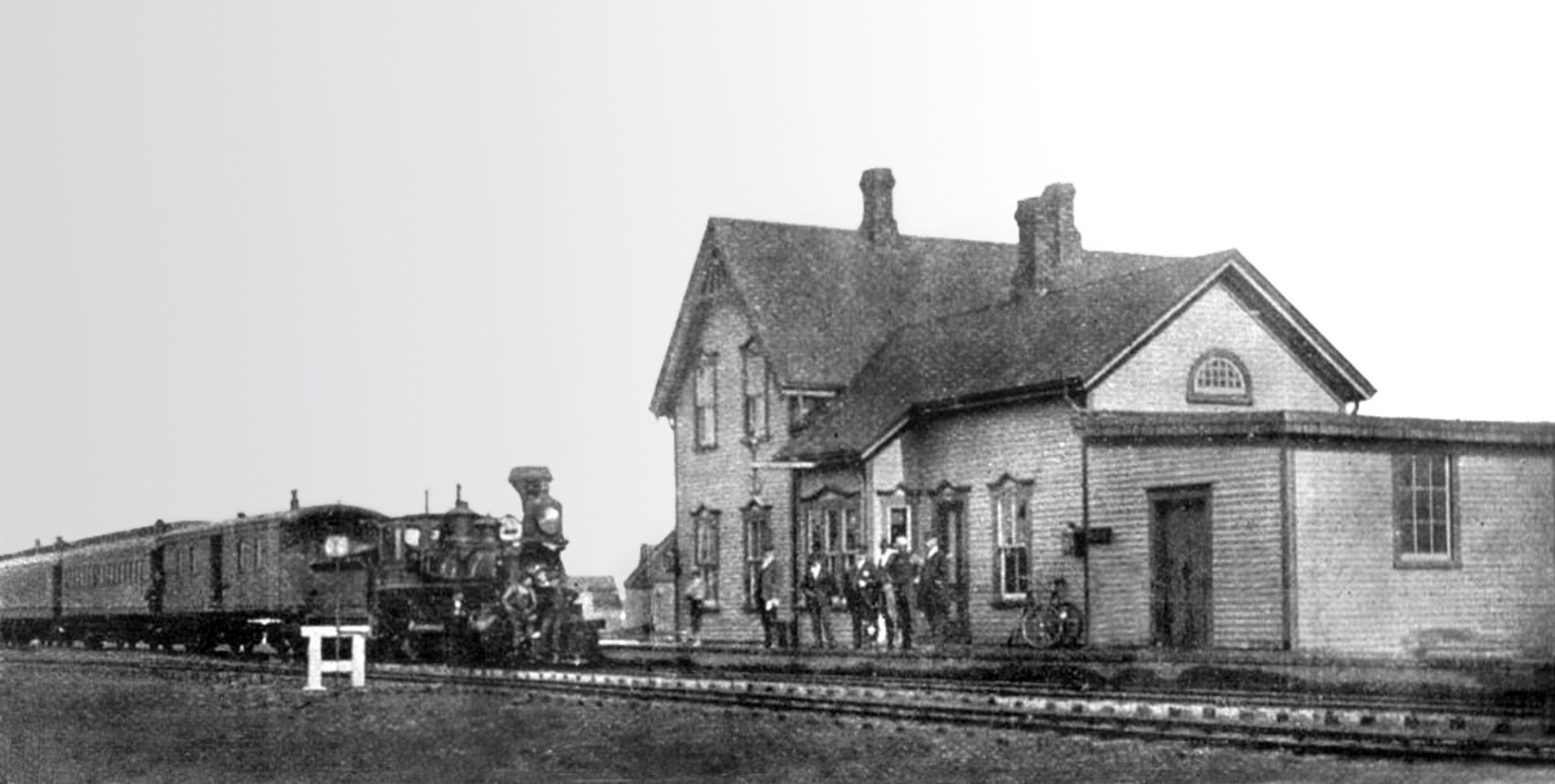
Take the train back to 1886, when the Tignish Railway Station stood as a bustling hub of activity at the western terminus of the Prince Edward Island Railway (PEIR). Built as part of the PEIR’s ambitious development, which began in 1871, the station became operational by 1886, connecting the vibrant community of Tignish to the rest of the island—and beyond.
The railway station wasn’t just a building; it was the lifeline of Tignish, bringing goods, news, and passengers to this westernmost corner of PEI. Farmers relied on the railway to ship their crops, local businesses thrived with improved access to markets, and families welcomed visitors or embarked on their own adventures.
Tignish itself has a fascinating history. Founded in 1799 by eight Acadian families from Malpeque, it later welcomed Irish immigrants in 1811, creating a unique blend of cultures and traditions. The town’s name, derived from the Mi’kmaq word Mtagunich (meaning “paddle”), reflects its deep connection to the natural world and its Indigenous heritage.
By the time the railway arrived, the town had already established itself as a thriving community, with landmarks like the iconic St. Simon & St. Jude Catholic Church showcasing its growth and resilience. The railway station became the heartbeat of the town, enabling commerce, connection, and opportunity.
Though the the trains stopped running in 1989, and the Tignish Railway Station is no longer standing, its legacy remains alive through the Confederation Trail, which follows the old railway route. This trail is now a cherished recreational path that invites Islanders and visitors to explore the beauty of PEI while tracing the footsteps of history.
Rediscover the spirit of Tignish! Today, Tignish is a charming community that honors its rich history while continuing to thrive in the present. Next time you visit, walk or cycle along the Confederation Trail to experience the history and charm of this vibrant community.

 The Annekenstein Monster