1902 Photograph of the schooner “Empress”, built by George Wightman at Montague, Prince Edward Island in 1902.
This terrific photograph from 1902 captures the schooner “Empress,” built by George Wightman on the shores of the Montague River, Prince Edward Island. A master shipbuilder, Wightman was part of a proud tradition that made PEI a hub for maritime craftsmanship during the 19th and early 20th centuries.
A Legacy of Craftsmanship, George Wightman was renowned for his skill in constructing vessels that were both functional and elegant. The Empress was one of many ships he built, showcasing his expertise and dedication to the craft. Shipbuilding was more than just a trade—it was an art form, and Wightman’s work contributed to PEI’s reputation as a leader in maritime industries.
The Golden Age of Shipbuilding on Prince Edward Island flourished during the 19th century, driven by the island’s abundant timber resources and sheltered waterways. At its peak in the 1860s, PEI was producing an average of 92 vessels per year, ranging from schooners to larger ships. The industry was vital to the island’s economy, providing jobs and connecting PEI to global markets.
The Montague River, where the Empress was constructed, was one of many shipbuilding hotspots on the island. Communities like Montague, Georgetown, and Charlottetown thrived as centers of maritime activity, with shipyards bustling with workers and vessels ready to set sail.
This photograph, part of the Craswell Portrait Studio fonds, is preserved in the Public Archives and Records Office of Prince Edward Island, ensuring that the legacy of PEI’s shipbuilding history continues to inspire future generations. Today, visitors can explore sites like the Green Park Shipbuilding Museum and Yeo House, which celebrate the island’s maritime heritage
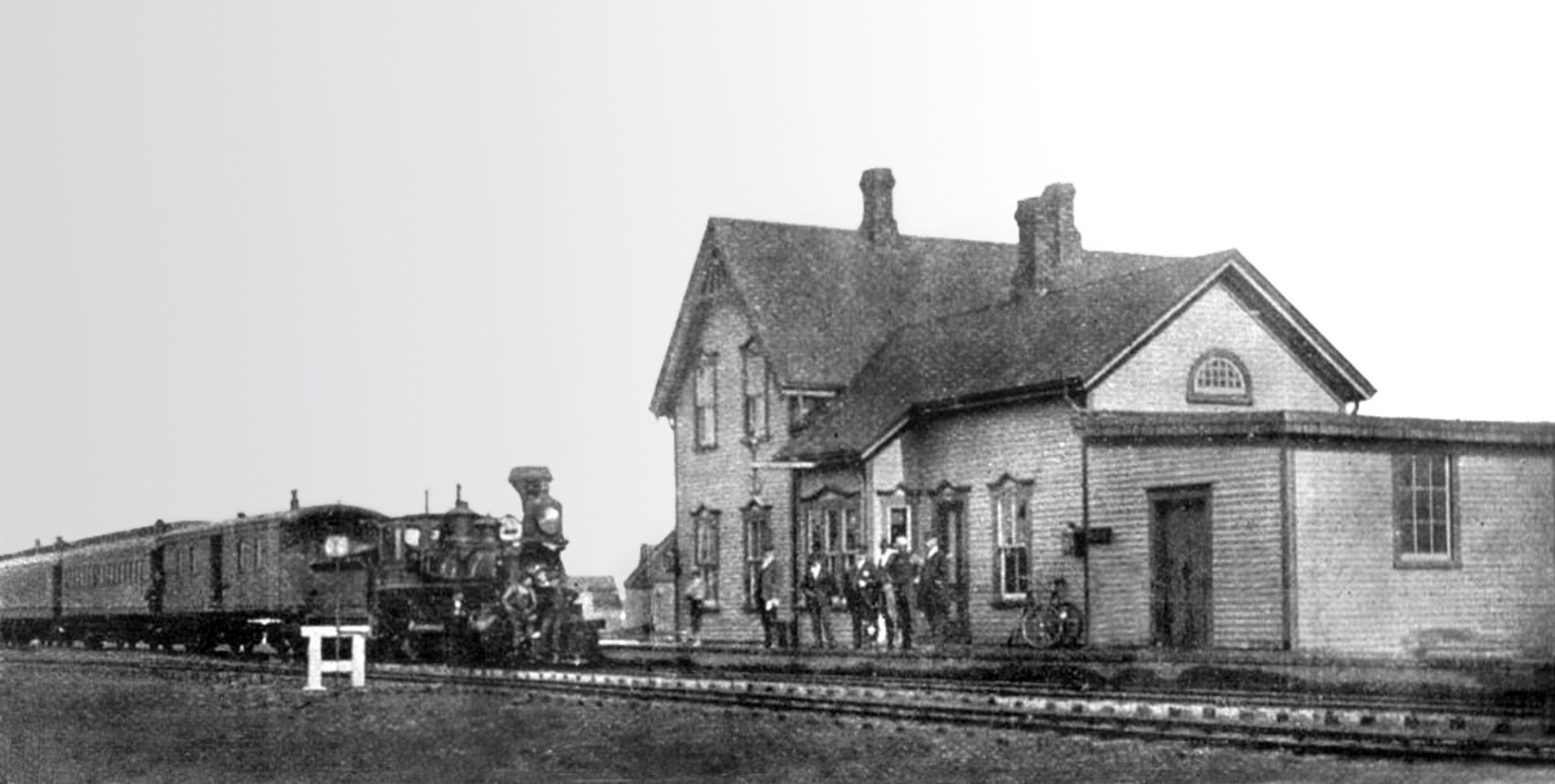
Railway Station in 1886 Tignish Prince Edward Island
Take the train back to 1886, when the Tignish Railway Station stood as a bustling hub of activity at the western terminus of the Prince Edward Island Railway (PEIR). Built as part of the PEIR’s ambitious development, which began in 1871, the station became operational by 1886, connecting the vibrant community of Tignish to the rest of the island—and beyond.
The railway station wasn’t just a building; it was the lifeline of Tignish, bringing goods, news, and passengers to this westernmost corner of PEI. Farmers relied on the railway to ship their crops, local businesses thrived with improved access to markets, and families welcomed visitors or embarked on their own adventures.
Tignish itself has a fascinating history. Founded in 1799 by eight Acadian families from Malpeque, it later welcomed Irish immigrants in 1811, creating a unique blend of cultures and traditions. The town’s name, derived from the Mi’kmaq word Mtagunich (meaning “paddle”), reflects its deep connection to the natural world and its Indigenous heritage.
By the time the railway arrived, the town had already established itself as a thriving community, with landmarks like the iconic St. Simon & St. Jude Catholic Church showcasing its growth and resilience. The railway station became the heartbeat of the town, enabling commerce, connection, and opportunity.
Though the the trains stopped running in 1989, and the Tignish Railway Station is no longer standing, its legacy remains alive through the Confederation Trail, which follows the old railway route. This trail is now a cherished recreational path that invites Islanders and visitors to explore the beauty of PEI while tracing the footsteps of history.
Rediscover the spirit of Tignish! Today, Tignish is a charming community that honors its rich history while continuing to thrive in the present. Next time you visit, walk or cycle along the Confederation Trail to experience the history and charm of this vibrant community.
A.P. Gallant General Merchant Rustico Area Prince Edward Island
This charming store has been a cornerstone of the Rustico community for decades. Originally owned by Amos Gallant, the store was more than just a place to shop—it was a hub for locals to gather, share stories, and connect. Did you know that Amos Gallant’s house, which once stood where the parking lot is today, was moved not once but twice? It started in Barachois, then found its way across the road from the store, where it still stands today under the care of Keith Gallant.
Rustico itself is steeped in history, with its roots tracing back to the Acadian settlers. The Gallant family, descendants of Michel Haché-Gallant, have deep ties to this area. Michel was one of the first Acadian settlers on the island, and his legacy lives on through the vibrant community and landmarks like this store.
Whether you’re a history buff or just love a good story, the A.P. Gallant General Merchant Store is a testament to the enduring spirit of Rustico. Next time you’re in the area, take a moment to appreciate the history that surrounds you!
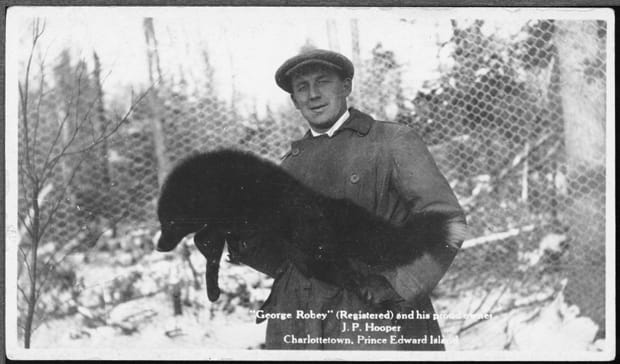
George Robey’ (Registered) and his proud owner J. P. Hooper, Charlottetown, Prince Edward Island 1929
📸 Captured in this photo from 1929, J.P. Hooper proudly holds George Robey, his prized breeding fox, and a key figure in Prince Edward Island’s illustrious silver fox farming legacy.
Meet George Robey, a registered breeding fox owned by J.P. Hooper, one of Prince Edward Island’s dedicated fox farmers. While not much is known about George Robey’s specific achievements, his name alone sparks curiosity and imagination. In the highly competitive and prestigious silver fox farming industry, every breeding fox played a crucial role in producing the luxurious pelts that made PEI a global hotspot for this trade.
Up until 1900, Charles Dalton and Robert Oulton were the only individuals breeding foxes in the West Prince area of Prince Edward Island. In 1900, Dalton sold a pair of breeders to Robert Tuplin and Captain James Gordon and another to B.I. and Silas Raynor. These six men formed the “Big Six Combine” and made a pact not to sell outside the circle. Robert Tuplin soon sold a pair to his nephew, Frank. Frank, unlike the “Big Six Combine” could sell to anyone. Fox farming soon spread throughout the Island with many men, including J.P. Hooper from Charlottetown, becoming involved in the industry, breeding foxes with the finest characteristics, ensuring the continued success of this lucrative trade.
George Robey likely represented not just excellence in breeding but also the pride and passion of J.P. Hooper and his contributions to this fascinating era of PEI’s history. Whether he was named for his striking features, his pedigree, or perhaps even after the famed English comedian and singer George Robey (who was popular in the late 19th and early 20th centuries), this fox surely played a key role in Hooper’s farm.
The fox farming industry in Prince Edward Island began to decline significantly after World War II. The demand for luxury furs decreased as fashion trends shifted, and synthetic materials became more popular. By the 1950s and 1960s, the industry had largely faded, although some farms continued operating on a smaller scale for a time.
Today, the fox farming industry is part of PEI’s historical tapestry, celebrated at the International Fox Museum and Hall of Fame in Summerside. Farmers like J.P. Hooper—and perhaps even George Robey himself—remain emblematic of an era defined by innovation, ambition, and the spirit of this island’s people.
🌟 Here’s to honoring the legacy of J.P. Hooper, George Robey, and the role they played in PEI’s unique silver fox story! 🏝️✨
Photo credit: Public Archives and Record Office of Prince Edward Island
George E. Full & Son starch factory and potato warehouse, Hunter River, Prince Edward Island, ca. 1930s.
Behold the bustling George E. Full & Son Starch Factory and Potato Warehouse, circa 1930s, a hub of activity during its heyday. This photo captures the heart of Prince Edward Island’s agricultural heritage, as trucks loaded with bags of PEI’s finest spuds fill the factory yard.
The factory’s story is steeped in resilience and entrepreneurial spirit. Founded by George E. Full in 1881, it initially operated as a cheese and starch factory. A tragic fire on Hallowe’en night of 1908 destroyed the original building, but it rose from the ashes by the following year—a testament to grit and determination.
After George retired, the reins were handed over to his son, G. Elliot Full, who continued to steer the business through the decades. The factory stood as a proud landmark until the early 1960s, when it was ultimately torn down, leaving behind memories of industry and innovation.
Hunter River may be a quiet spot today, but its rich history reminds us how communities thrived on the potato industry, starch production, and local ingenuity.
Starch production played a significant role in Prince Edward Island’s economy during the late 19th and early 20th centuries. PEI’s fertile soil and favorable climate made it ideal for potato farming, which in turn fueled the starch industry. Factories like the George E. Full & Son Starch Factory processed large quantities of locally grown potatoes into starch—a valuable product used in food, textiles, paper production, and even early plastics.
This industry provided a crucial source of income for farmers, who had a market for their potato crops beyond just fresh consumption. Additionally, starch factories created jobs in rural communities, supporting not only factory workers but also those in transportation and related services.
The rise of starch production also contributed to PEI’s reputation as a leader in potato agriculture. Fast-forward to today, and Prince Edward Island continues to shine as Canada’s Potato Capital. With over 84,000 acres of potatoes harvested annually, the island’s farmers produce some of the highest-quality potatoes in the world.
While starch factories like the one in Hunter River are a thing of the past, the spirit of innovation remains strong. Modern technology and sustainable farming practices ensure that PEI’s potatoes are not only delicious but also environmentally responsible.
Beyond the fields, PEI potatoes have become culinary icons, appearing in kitchens across the globe. From crispy French fries to creamy mashed potatoes, these spuds are a testament to the island’s rich agricultural history—and its future.
The story of PEI’s potato industry is one of resilience, creativity, and community, proving that a simple tuber can help build an economy and a legacy.
This Charlottetown jail, known as “Harvey’s Brig,” was built in the 1830s and was used as a jail for eighty years.
Step back in time to when Charlottetown’s Connaught Square (later renamed Pownal Square) housed one of the Island’s most infamous landmarks: Harvey’s Brig. Built in the 1830s, this formidable structure served as a jail for a remarkable 80 years, a witness to some of Prince Edward Island’s most fascinating and turbulent moments.
The jail’s nickname, Harvey’s Brig, is said to have come from an early jailer, Harvey, whose no-nonsense reputation and strict rule were the talk of the town. Tales abound of the local mischief-makers and petty criminals who passed through its doors.
One infamous case involved a group of prisoners who reportedly attempted an escape, only to be thwarted by Harvey himself. Legend has it that the jailer’s quick thinking and firm hand earned him the grudging respect of the community—and the miscreants he locked up. The brig, while unyielding, was also known for being overcrowded and less than comfortable, painting a vivid picture of justice in the 19th century.
In its time, Harvey’s Brig held petty criminals, local troublemakers, and even those accused of more serious crimes awaiting trials or sentencing. Justice in the 1800s was harsh, and punishments like public whippings or branding were not uncommon. The brig stood as a stern reminder of the rule of law in a growing city.
Overcrowding was a persistent issue, as the jail was relatively small and not designed to accommodate a growing population. This led to calls for better facilities, which eventually resulted in the construction of a new jail in 1911.
Though the building is long gone, its legacy adds an intriguing chapter to the history of PEI’s capital city. A snapshot of life from a bygone era, it reminds us of how much our towns—and justice systems—have transformed over the centuries.
Next time you stroll through Pownal Square, imagine Harvey’s Brig, the bustling square of the 1830s and the echoes of the past that still linger.
1901 Image depicts men, women and children posed with horses and carriages in front of the “Crowlands” residence of Mr. and Mrs. Edward Bayfield on North River Road in Charlottetown, Prince Edward Island. Photographer’s name (C. Lewis)
Item Number Acc3466/HF74.27.6.11
Host Collection Prince Edward Island Museum and Heritage Foundation collection ; DuVernet collection
Physical Location Public Archives and Records Office of Prince Edward Island
Caption “‘Crowlands’ Home of Mr. and Mrs. Edward Bayfield – North River Road”
Date (original) [ca. 1901
Creator (original) C. Lewis
Originally posted to Earle’s PEI History page on Facebook on March 24, 2025
This captivating photograph from 1901 transports us to Crowlands, the elegant residence of Mr. and Mrs. Edward Bayfield, nestled on North River Road, Charlottetown. Posing proudly with their horses and carriages, the men, women, and children in this image reflect the grace and charm of a bygone era. 🏡🐎
Crowlands stood not just as a home but as a symbol of a vibrant community, where families gathered, and daily life unfolded in the gentle rhythms of a bygone time. Today, it evokes nostalgia for PEI’s rural charm and the enduring legacy of its history.
The Bayfields were part of Charlottetown’s vibrant community, and their home, Crowlands, stood as a symbol of the island’s rural elegance.
The photograph, taken by C. Lewis, beautifully captures the essence of life at the turn of the century, where horse-drawn carriages were the height of transportation and family gatherings were the heart of daily life.
Photographers like C. Lewis played a pivotal role in preserving the stories and moments of Prince Edward Island’s past. In the early 20th century, when photography was still a relatively new art form, capturing an image was a deliberate and significant process. These images documented not just people and places but the evolving essence of community, culture, and daily life.
Through their lenses, photographers became historians, freezing moments in time that might otherwise have faded into memory. Their work provides us with a window into history, allowing us to see how people lived, dressed, and connected with their surroundings.
Today, this photograph, part of the Prince Edward Island Museum and Heritage Foundation collection, reminds us of the power of photography to tell stories, evoke emotions, and keep history alive for generations to come
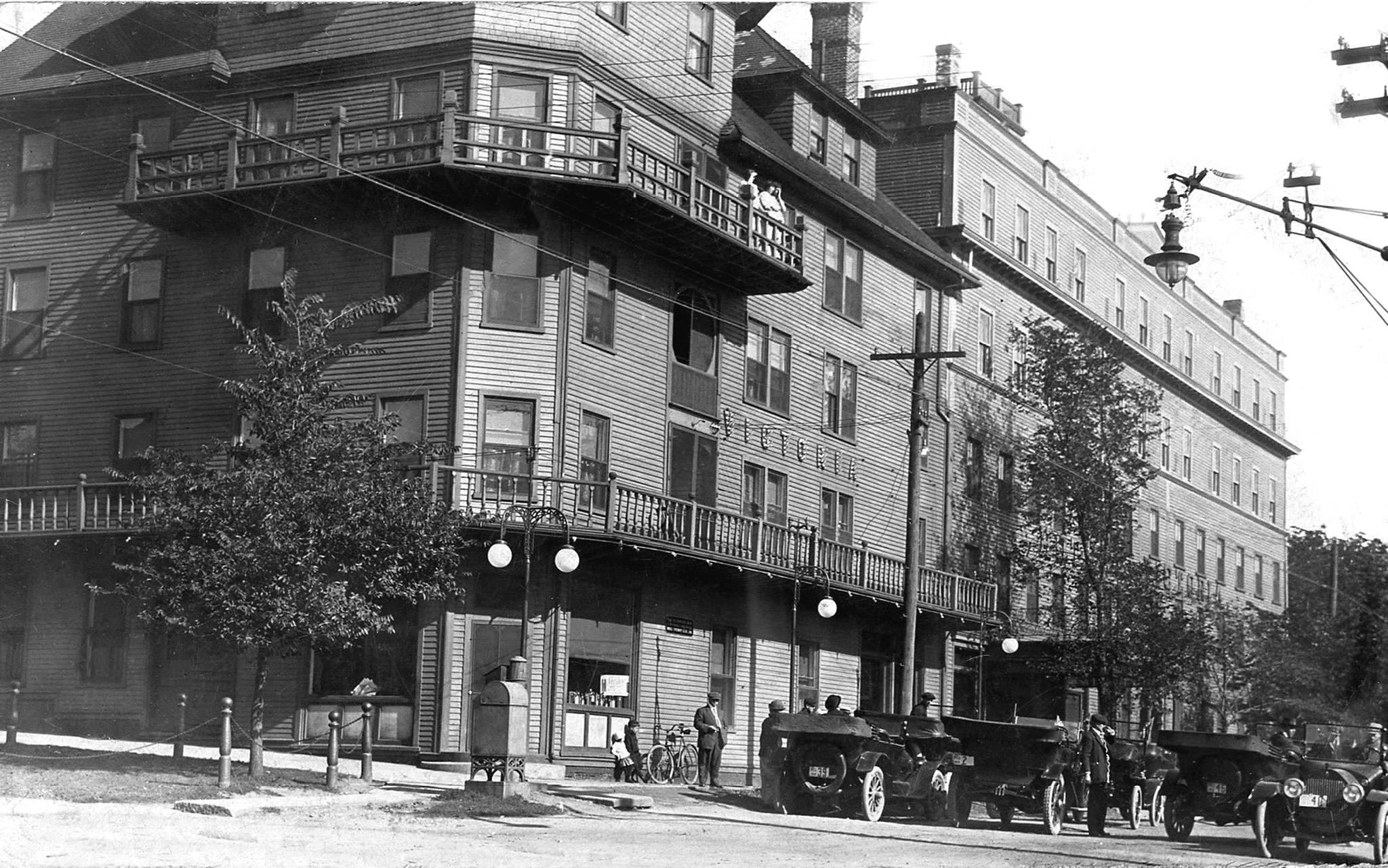
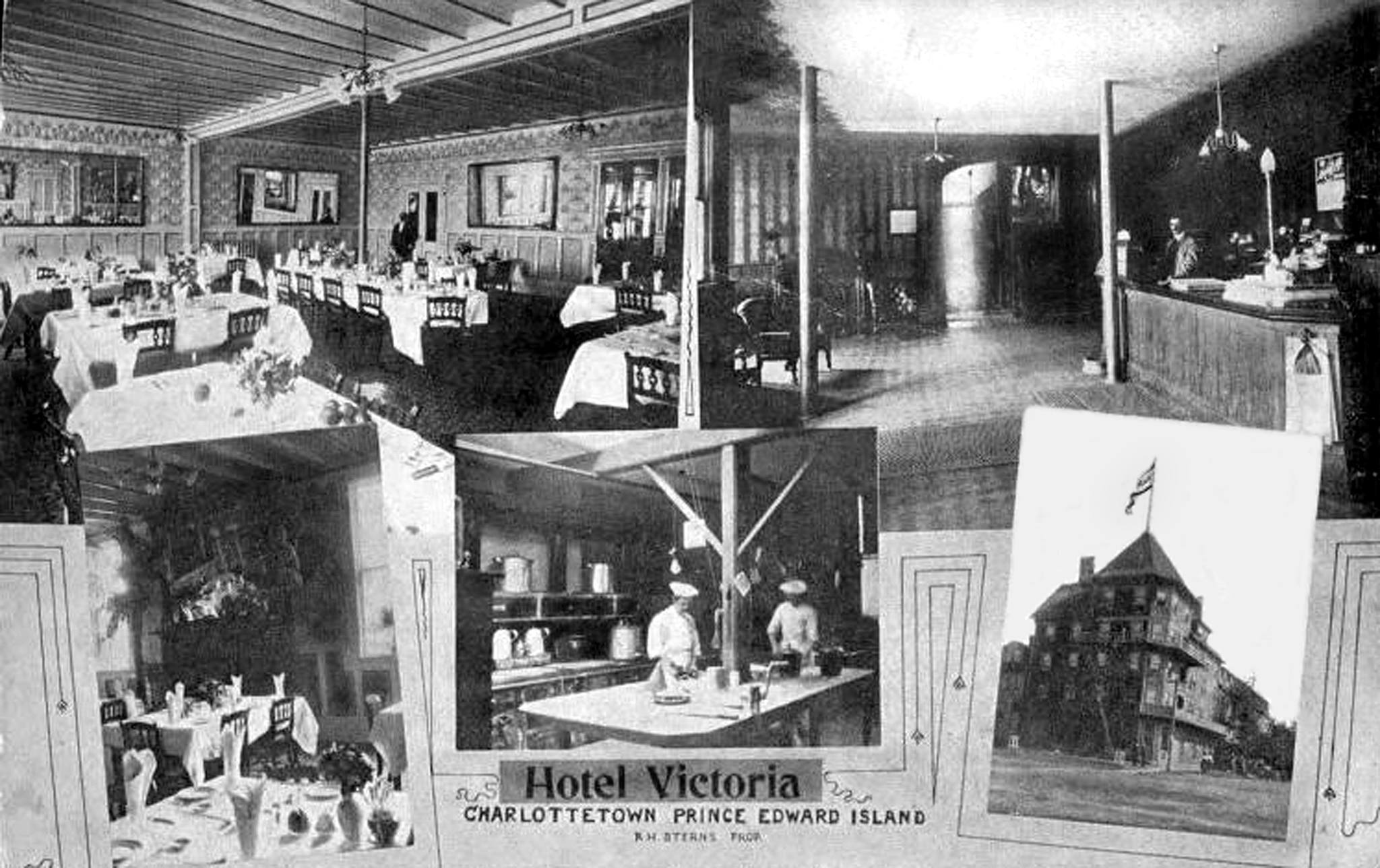
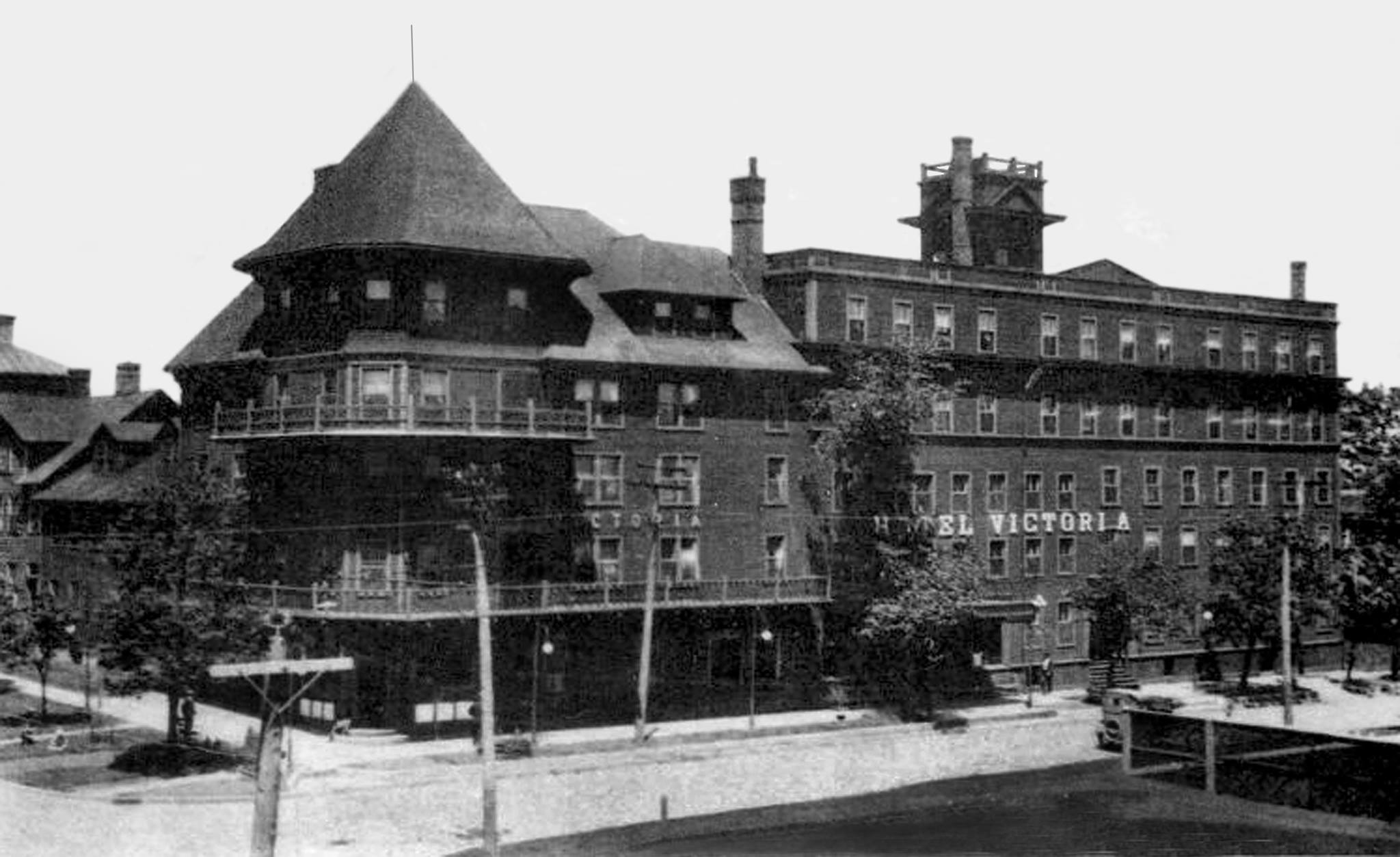
These striking photos from 1905 to 1919 capture the grandeur of the Victoria Hotel, once located at the corner of Water Street and Great George Street, Charlottetown, Prince Edward Island. Built in the late 19th century, the Victoria Hotel was a hub of the city, offering elegant accommodations and a warm welcome to visitors exploring Prince Edward Island.
The hotel was known for its luxurious amenities and prime location, making it a popular choice for visitors to Charlottetown. While specific details about room prices or notable guests remain elusive, it’s likely that the Victoria Hotel catered to a mix of tourists and business travelers, drawn to the Island’s charm and burgeoning economy during this era.
Victoria Hotel 1905 Great George Street and Water Street Charlottetown Prince Edward Island
The Victoria Hotel was not only a place of lodging but also a social hub, hosting events and gatherings that brought the community together. Its prime location and elegant design made it a symbol of Charlottetown’s charm and sophistication during its time.
Sadly, this iconic building met its fate on Saturday, January 12, 1929, when a devastating fire reduced it to ashes. The fire was a significant loss for Charlottetown, as the hotel was considered one of the finest in the city at the time. But it also paved the way for new developments in Charlottetown’s hospitality industry. The Rodd Charlottetown Hotel, built in 1931, was constructed as a replacement, continuing the tradition of welcoming guests to the Island.
Did you know? Charlottetown’s downtown has been shaped by resilience and innovation. From the Great Fire of 1866 to the loss of the Victoria Hotel, the city has rebuilt and thrived, creating a unique blend of history and progress.
I was browsing through my google drive and came across some lyrics I had written years ago. They were for a song called “Mangez Ma Poutine” by a fake Acadian band named Pota-trois, from the fake album entitled ‘Taber-Nickle-Nacle”.
I think my purpose was to create a rather banal song, written in French and badly translated into English. I’ve always been a fan of poor translations. Of course, since I don’t speak the language hardly at all, the French lyrics were initially translated from English, using Google Translate, and I am sure, there are likely all kinds of bad or poor French grammatical things going on there, so to the French, I apologize for any butchering of the language that may have resulted.





 The Annekenstein Monster