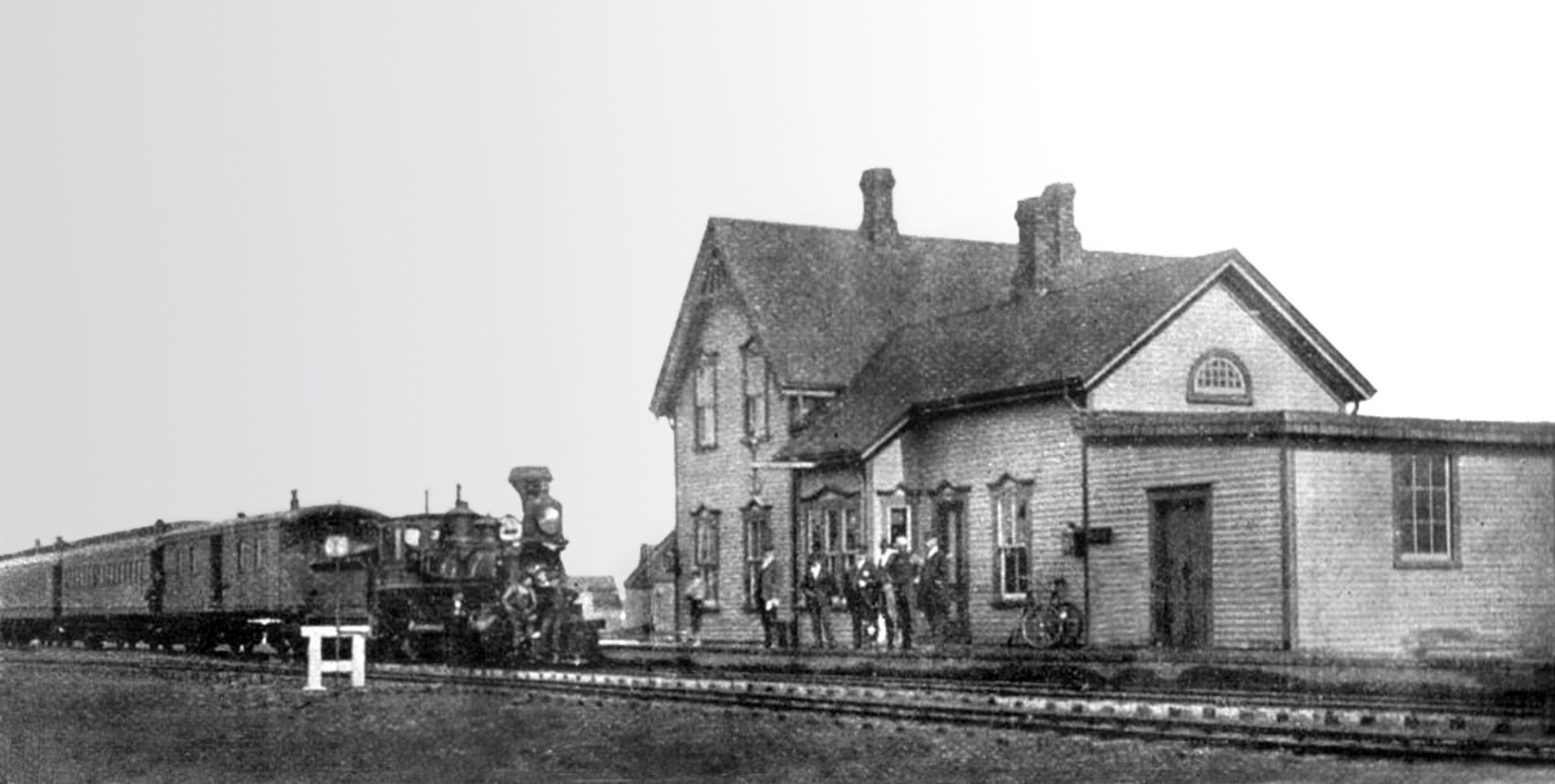
Railway Station in 1886 Tignish Prince Edward Island
Take the train back to 1886, when the Tignish Railway Station stood as a bustling hub of activity at the western terminus of the Prince Edward Island Railway (PEIR). Built as part of the PEIR’s ambitious development, which began in 1871, the station became operational by 1886, connecting the vibrant community of Tignish to the rest of the island—and beyond.
The railway station wasn’t just a building; it was the lifeline of Tignish, bringing goods, news, and passengers to this westernmost corner of PEI. Farmers relied on the railway to ship their crops, local businesses thrived with improved access to markets, and families welcomed visitors or embarked on their own adventures.
Tignish itself has a fascinating history. Founded in 1799 by eight Acadian families from Malpeque, it later welcomed Irish immigrants in 1811, creating a unique blend of cultures and traditions. The town’s name, derived from the Mi’kmaq word Mtagunich (meaning “paddle”), reflects its deep connection to the natural world and its Indigenous heritage.
By the time the railway arrived, the town had already established itself as a thriving community, with landmarks like the iconic St. Simon & St. Jude Catholic Church showcasing its growth and resilience. The railway station became the heartbeat of the town, enabling commerce, connection, and opportunity.
Though the the trains stopped running in 1989, and the Tignish Railway Station is no longer standing, its legacy remains alive through the Confederation Trail, which follows the old railway route. This trail is now a cherished recreational path that invites Islanders and visitors to explore the beauty of PEI while tracing the footsteps of history.
Rediscover the spirit of Tignish! Today, Tignish is a charming community that honors its rich history while continuing to thrive in the present. Next time you visit, walk or cycle along the Confederation Trail to experience the history and charm of this vibrant community.
I was browsing through my google drive and came across some lyrics I had written years ago. They were for a song called “Mangez Ma Poutine” by a fake Acadian band named Pota-trois, from the fake album entitled ‘Taber-Nickle-Nacle”.
I think my purpose was to create a rather banal song, written in French and badly translated into English. I’ve always been a fan of poor translations. Of course, since I don’t speak the language hardly at all, the French lyrics were initially translated from English, using Google Translate, and I am sure, there are likely all kinds of bad or poor French grammatical things going on there, so to the French, I apologize for any butchering of the language that may have resulted.
My oldest brother, Earle, passed away in December 2023.
For as long as I knew him – which, for those who don’t want to do the math, is my entire life – Earle was an artist of sorts. A dabbler of creative concepts. A painter of paintings.
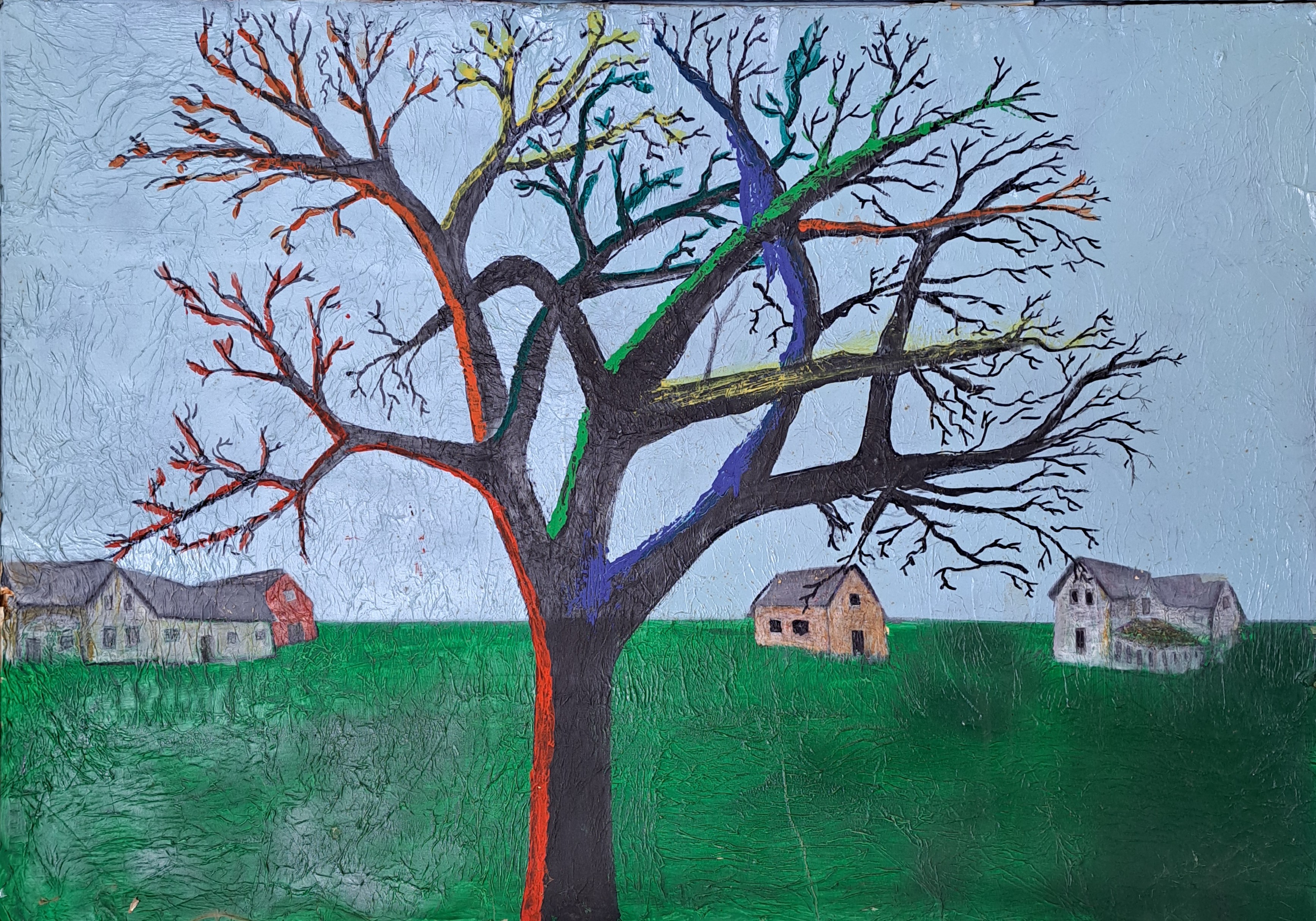
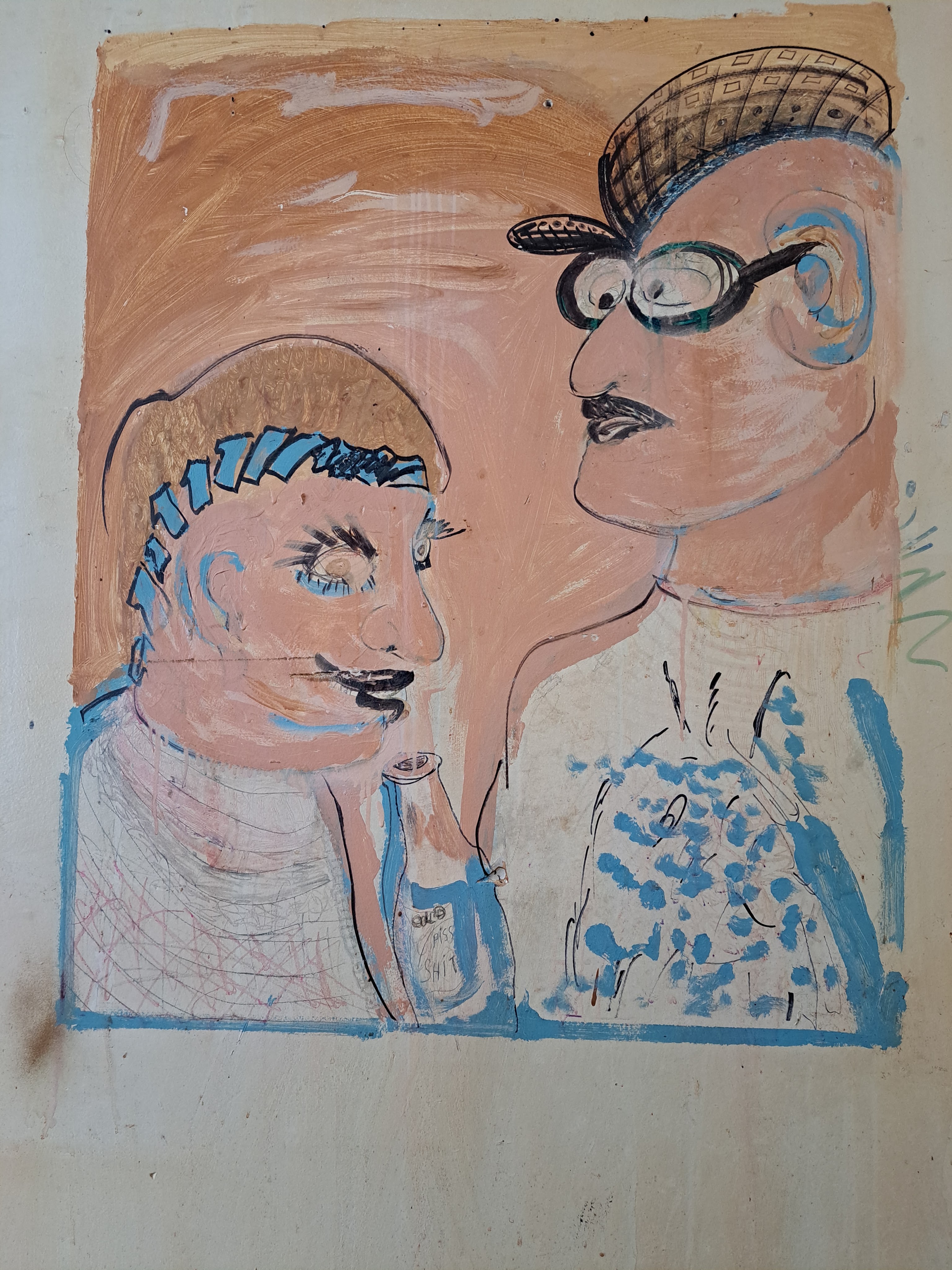
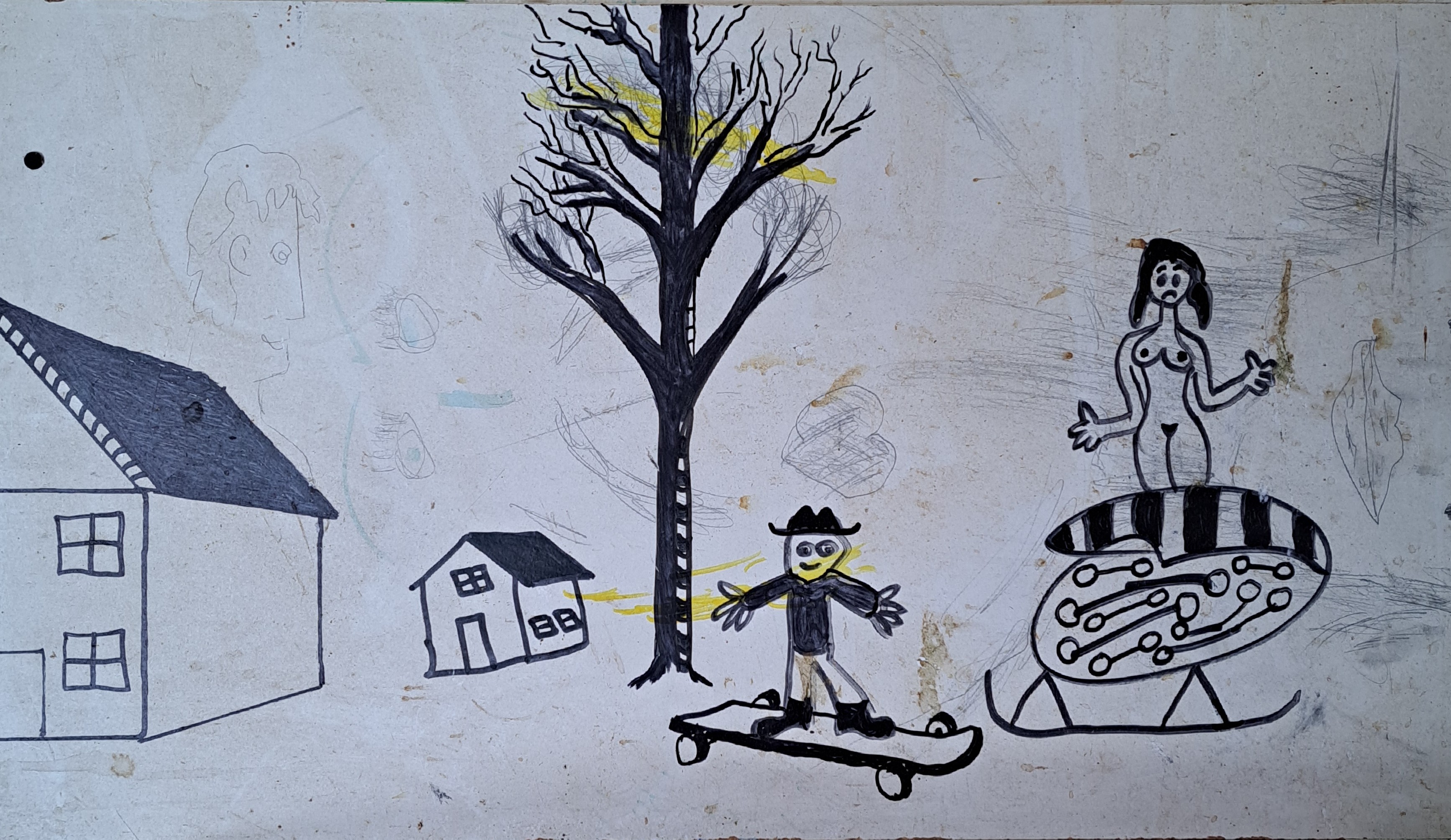
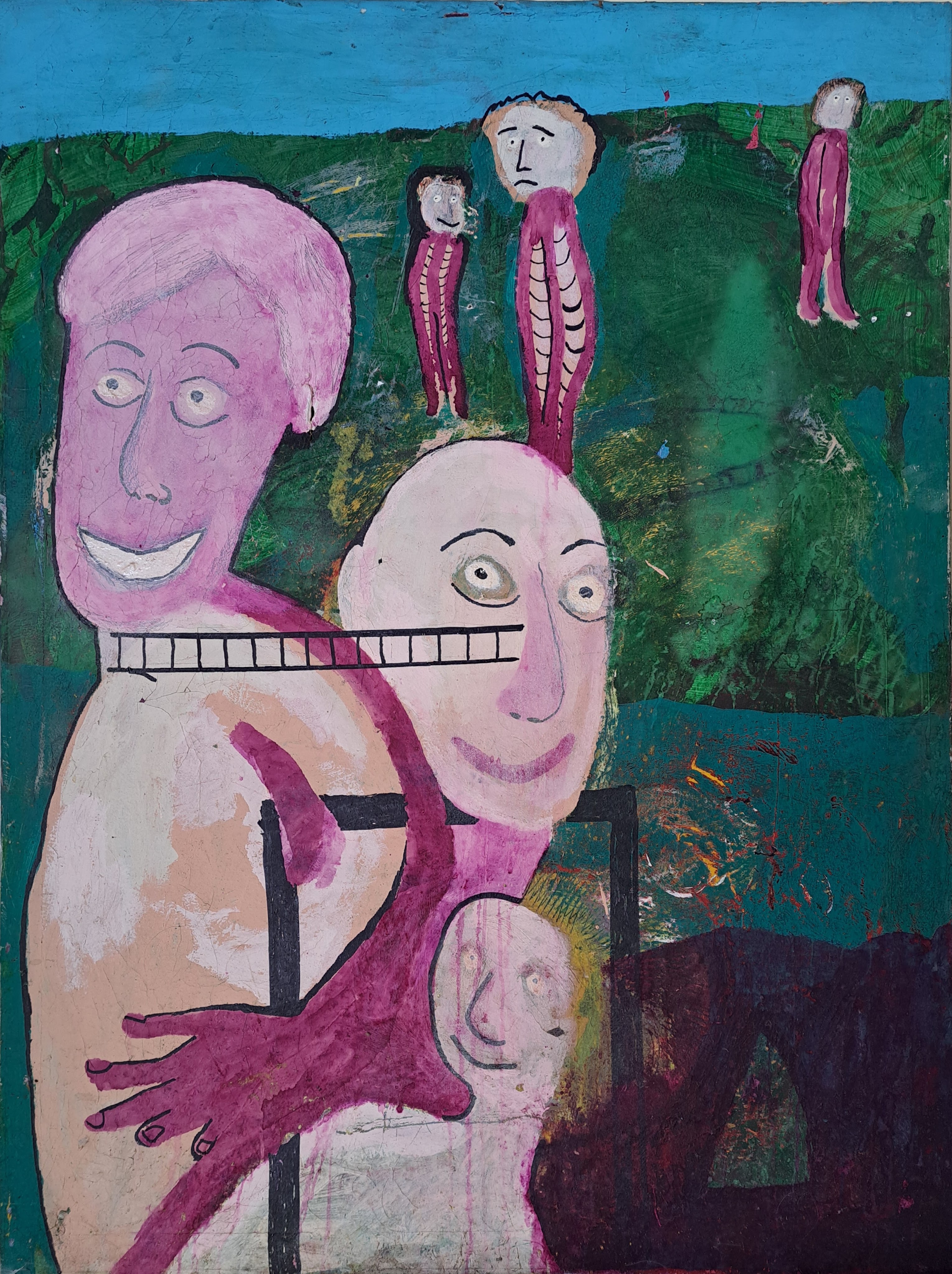
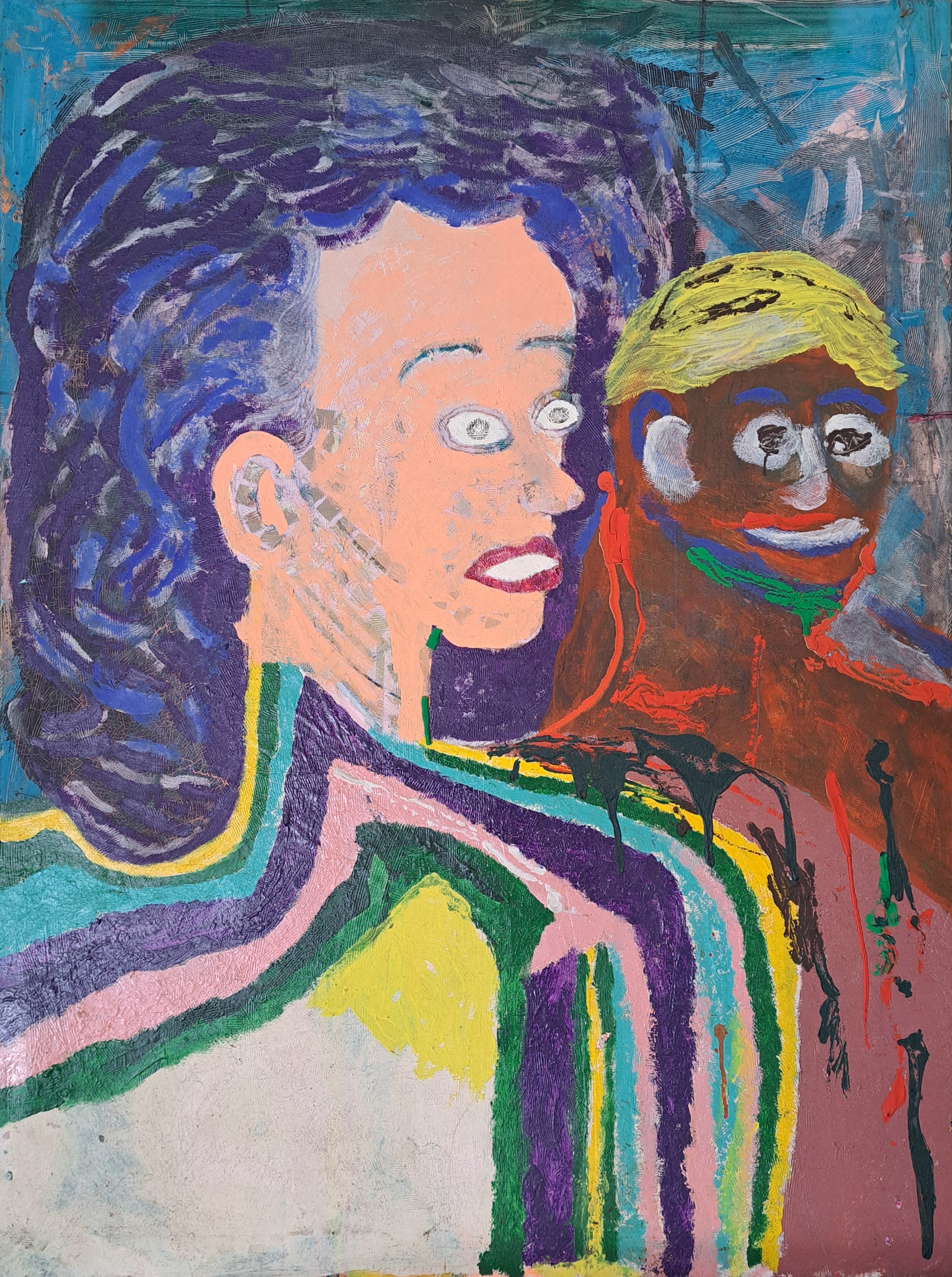
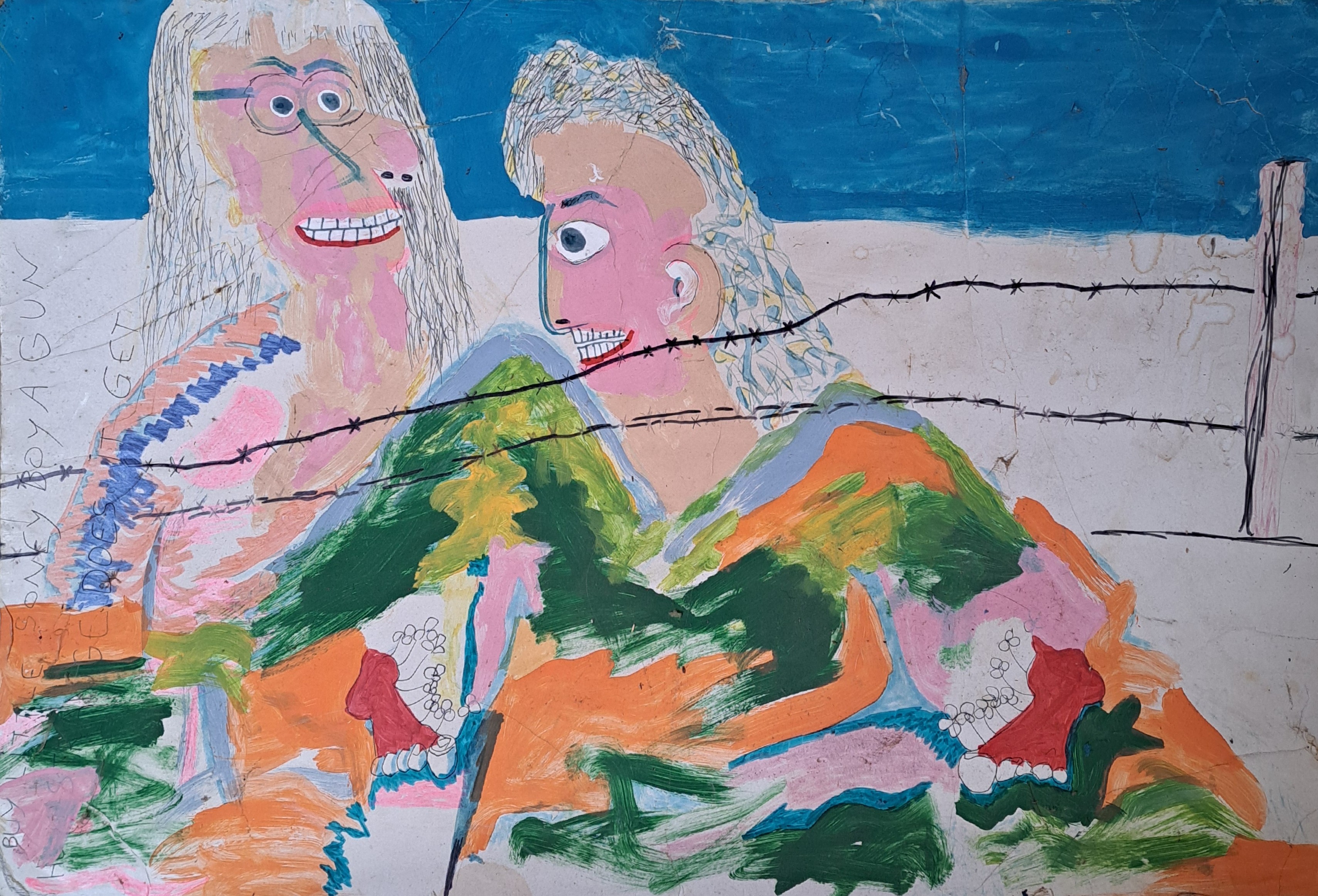
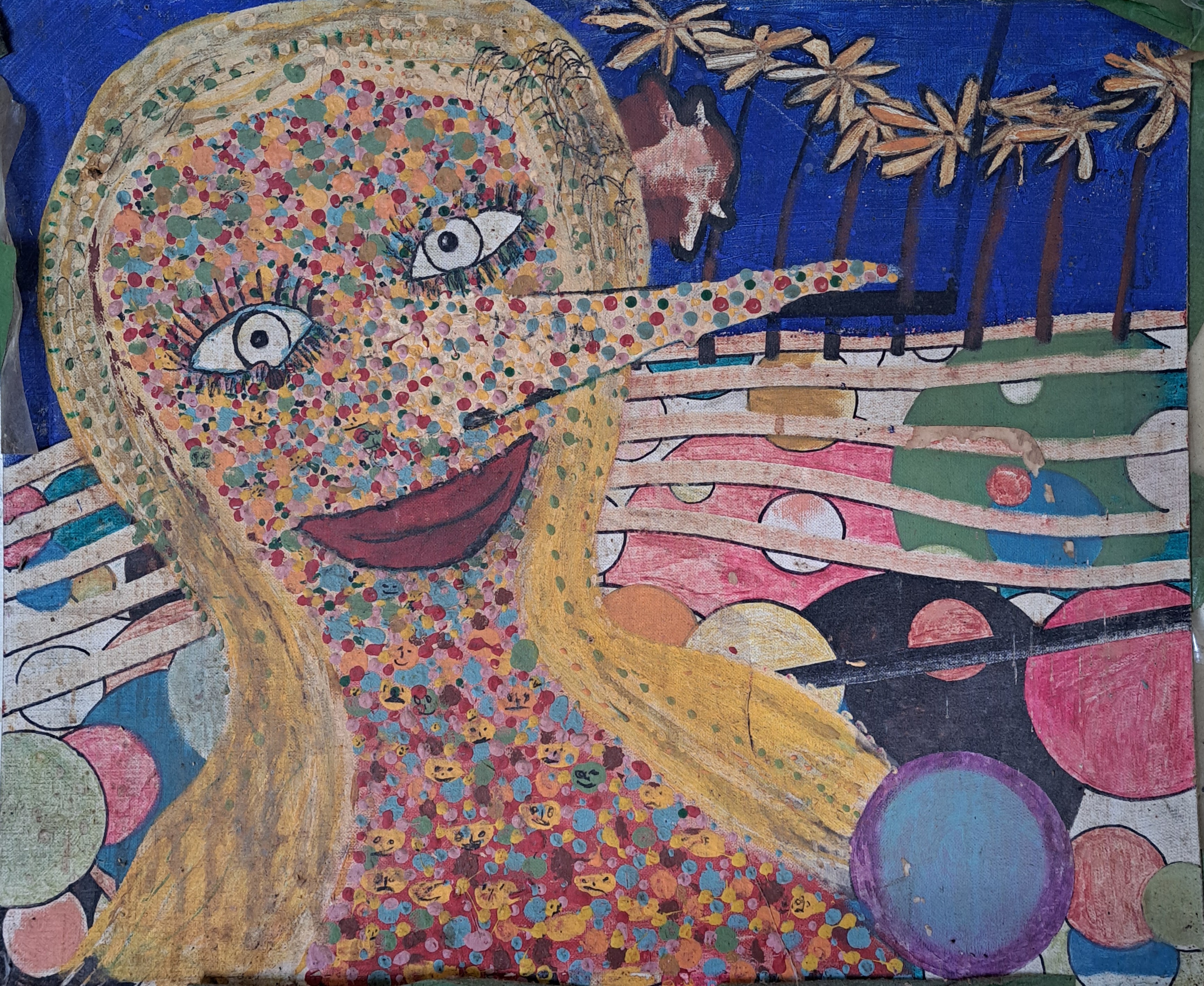
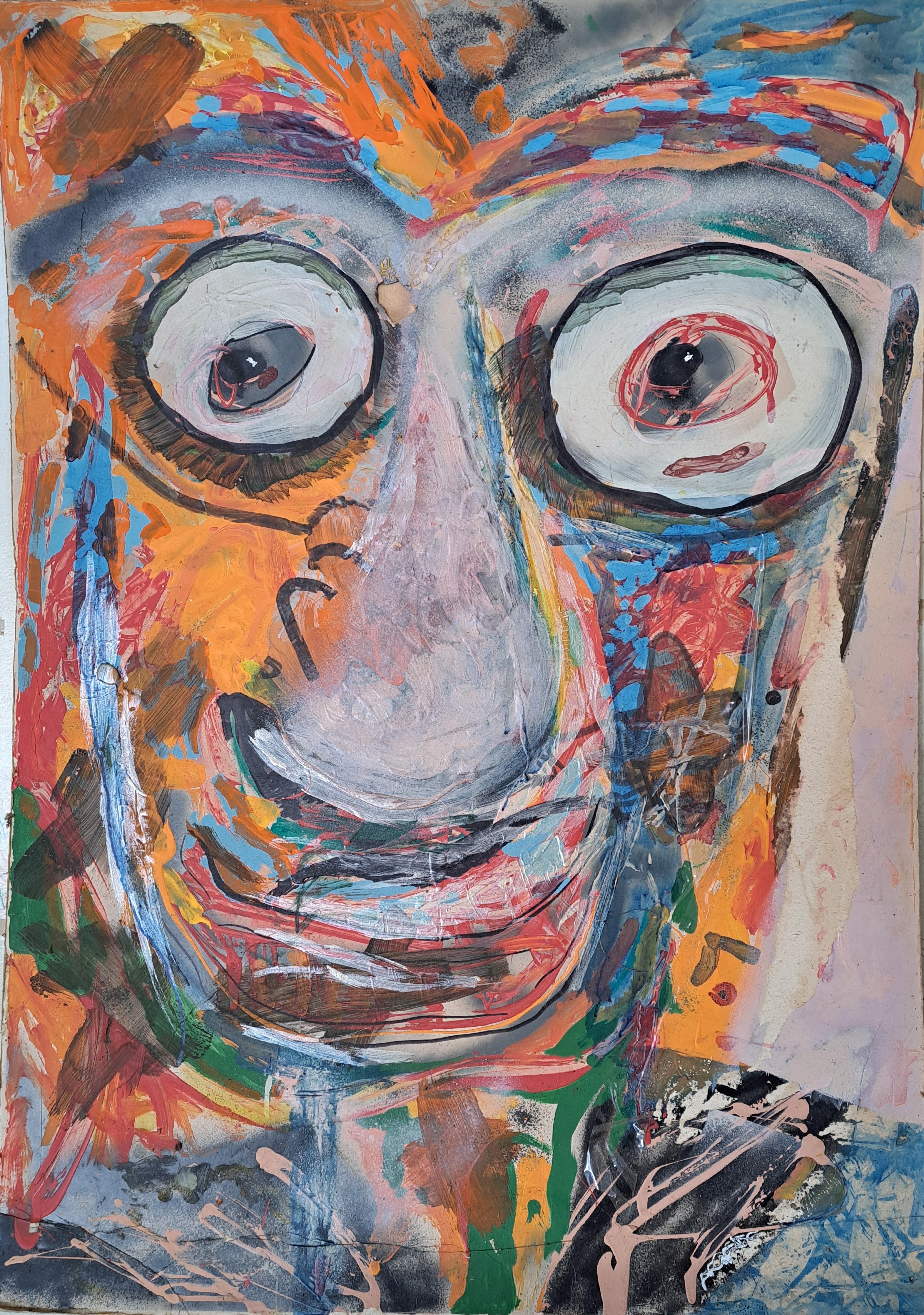
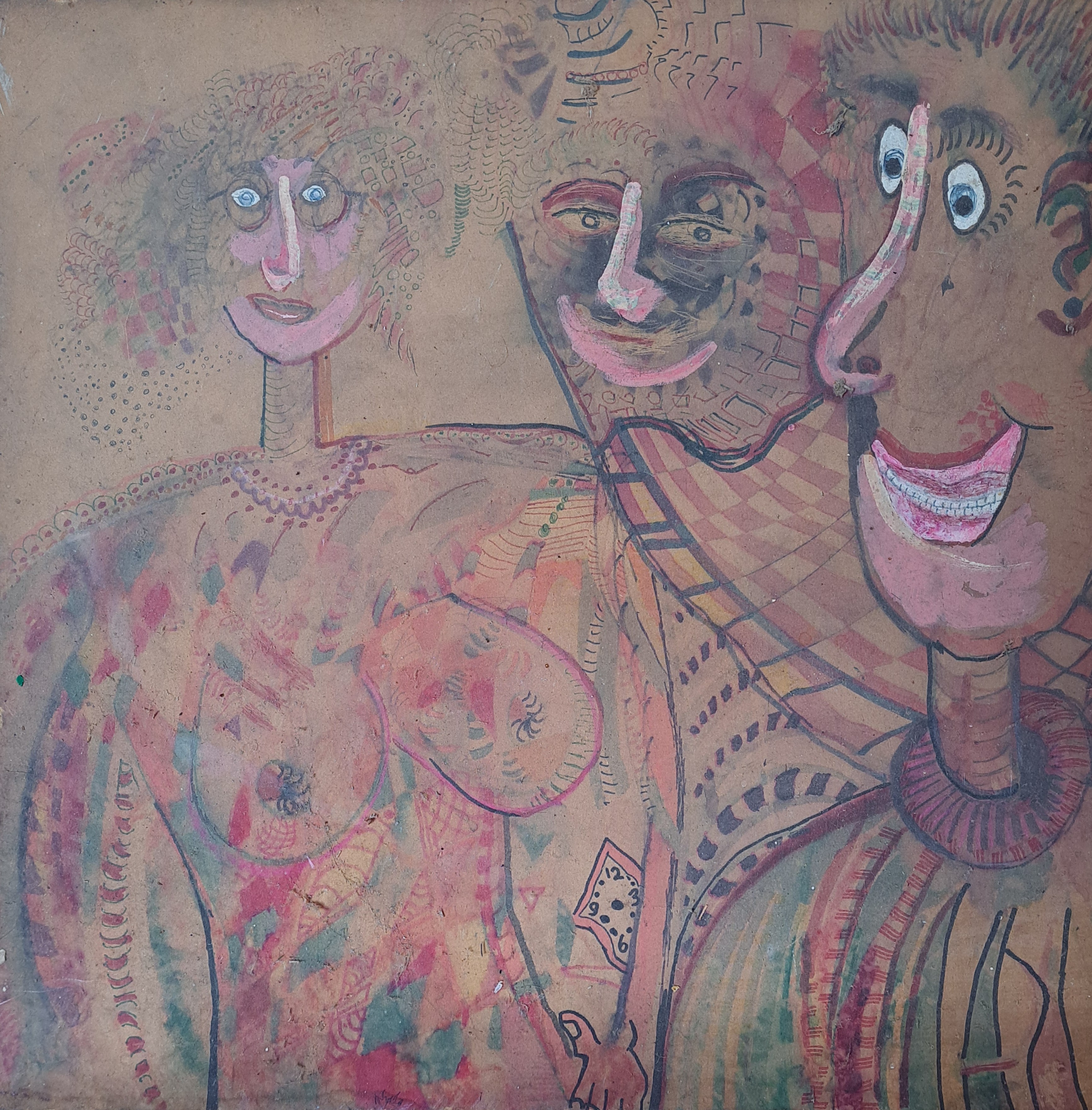
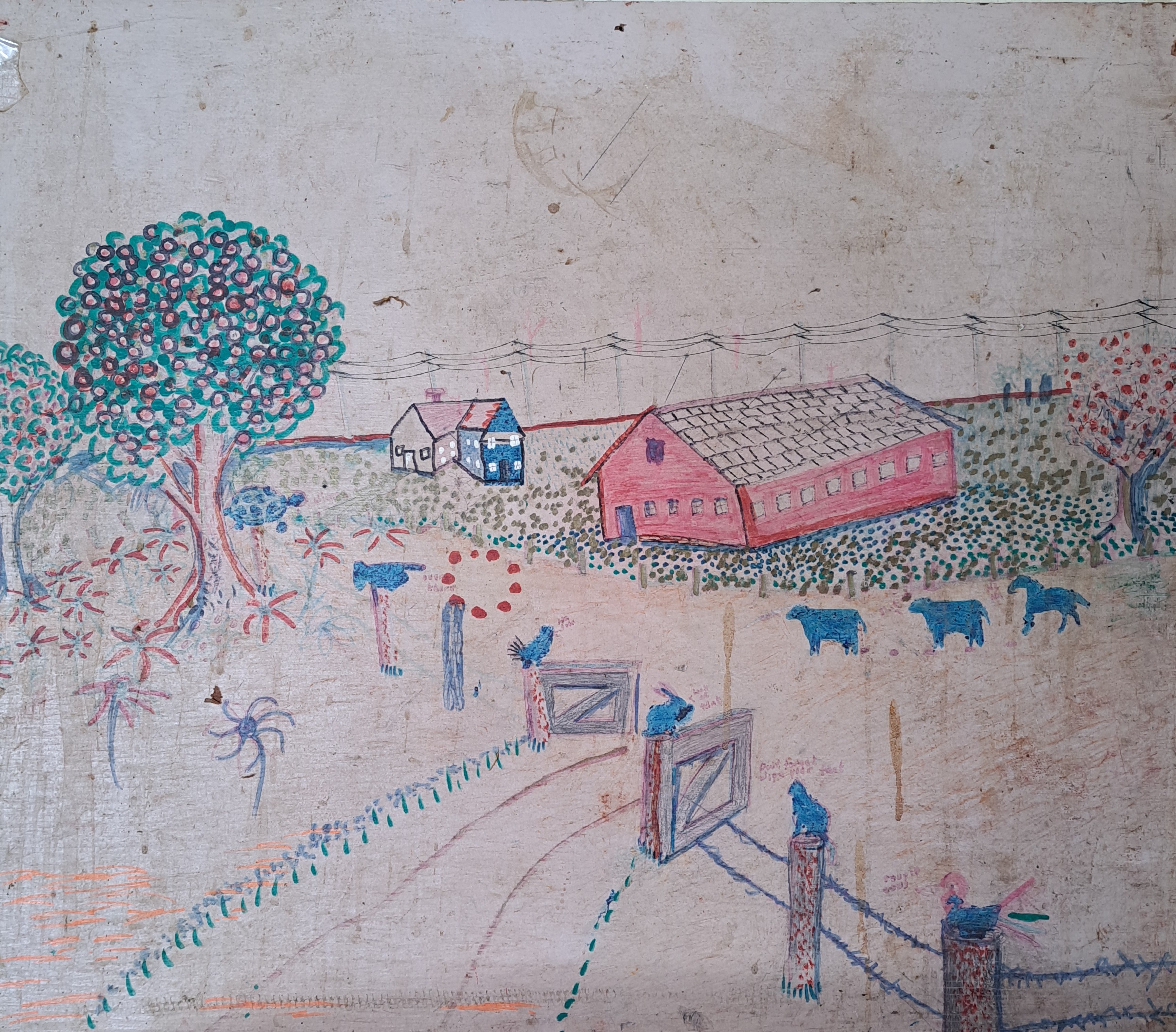
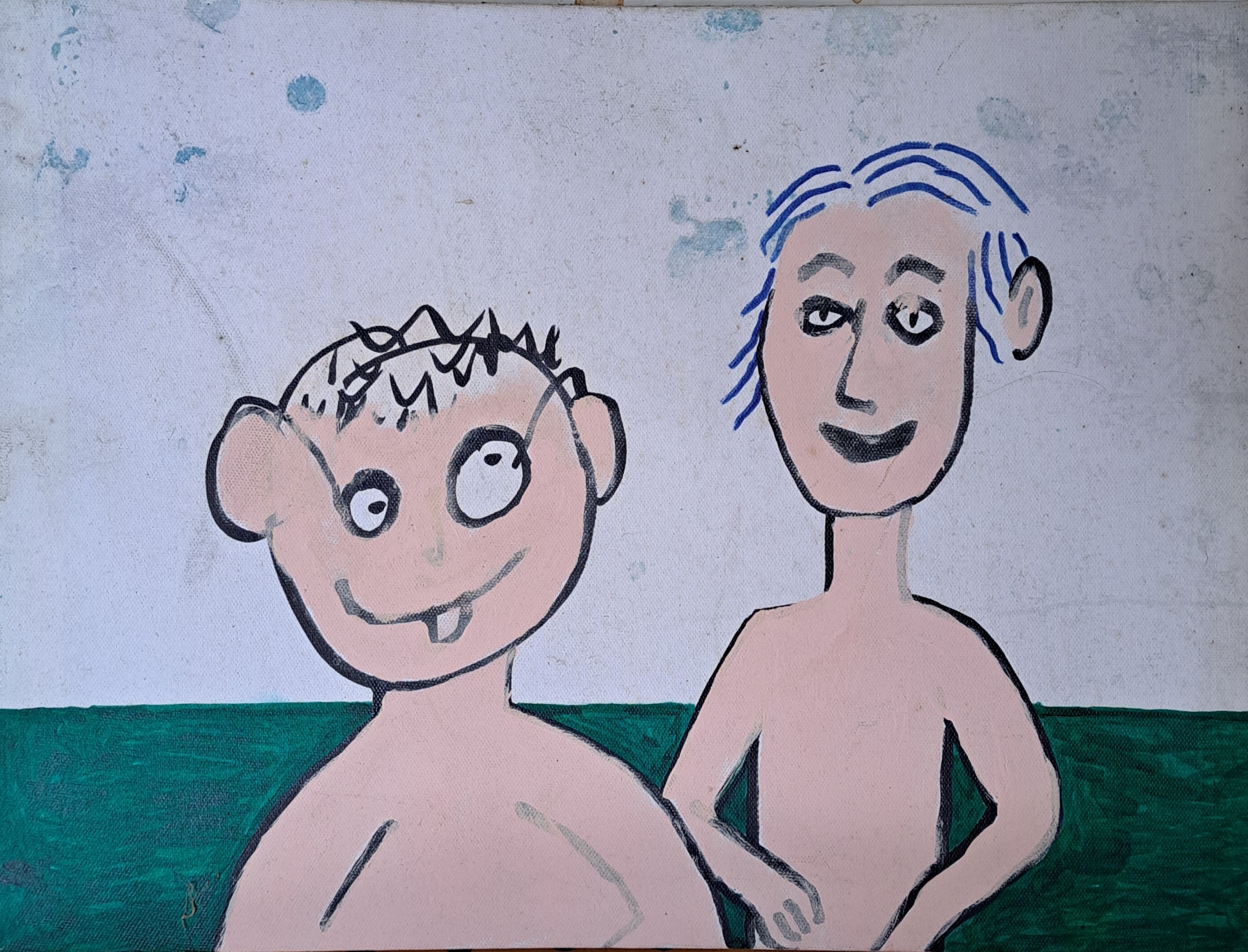
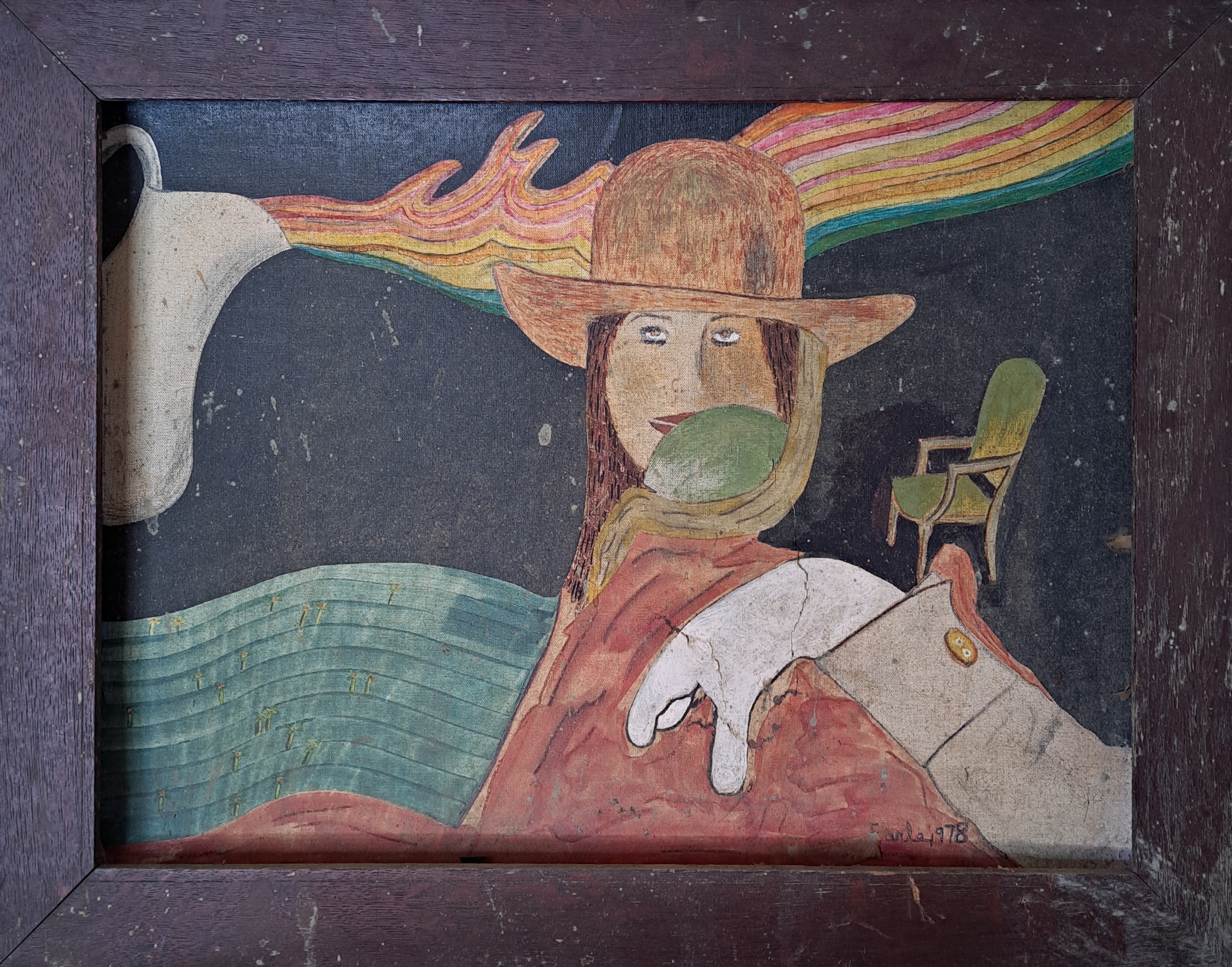
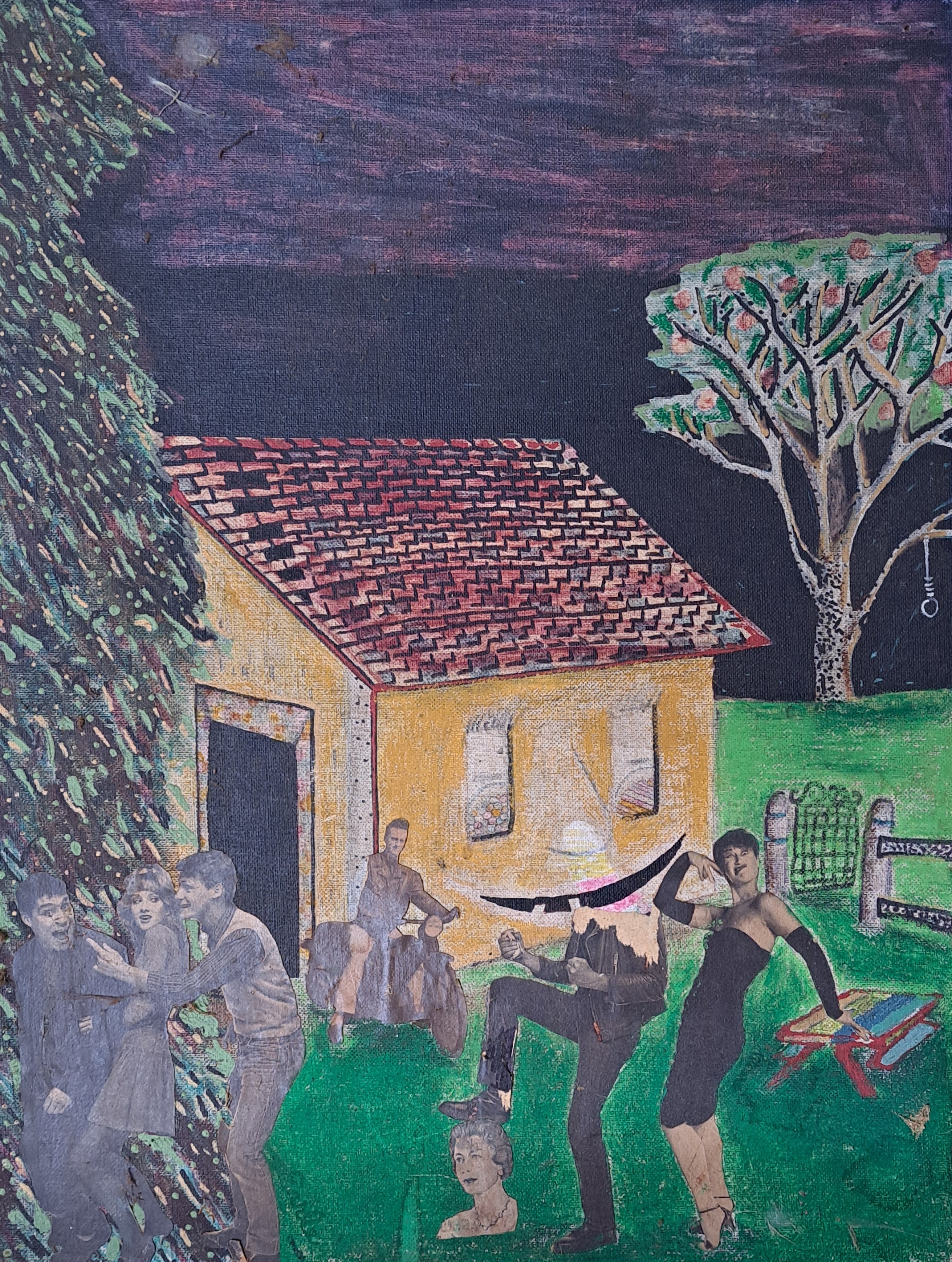
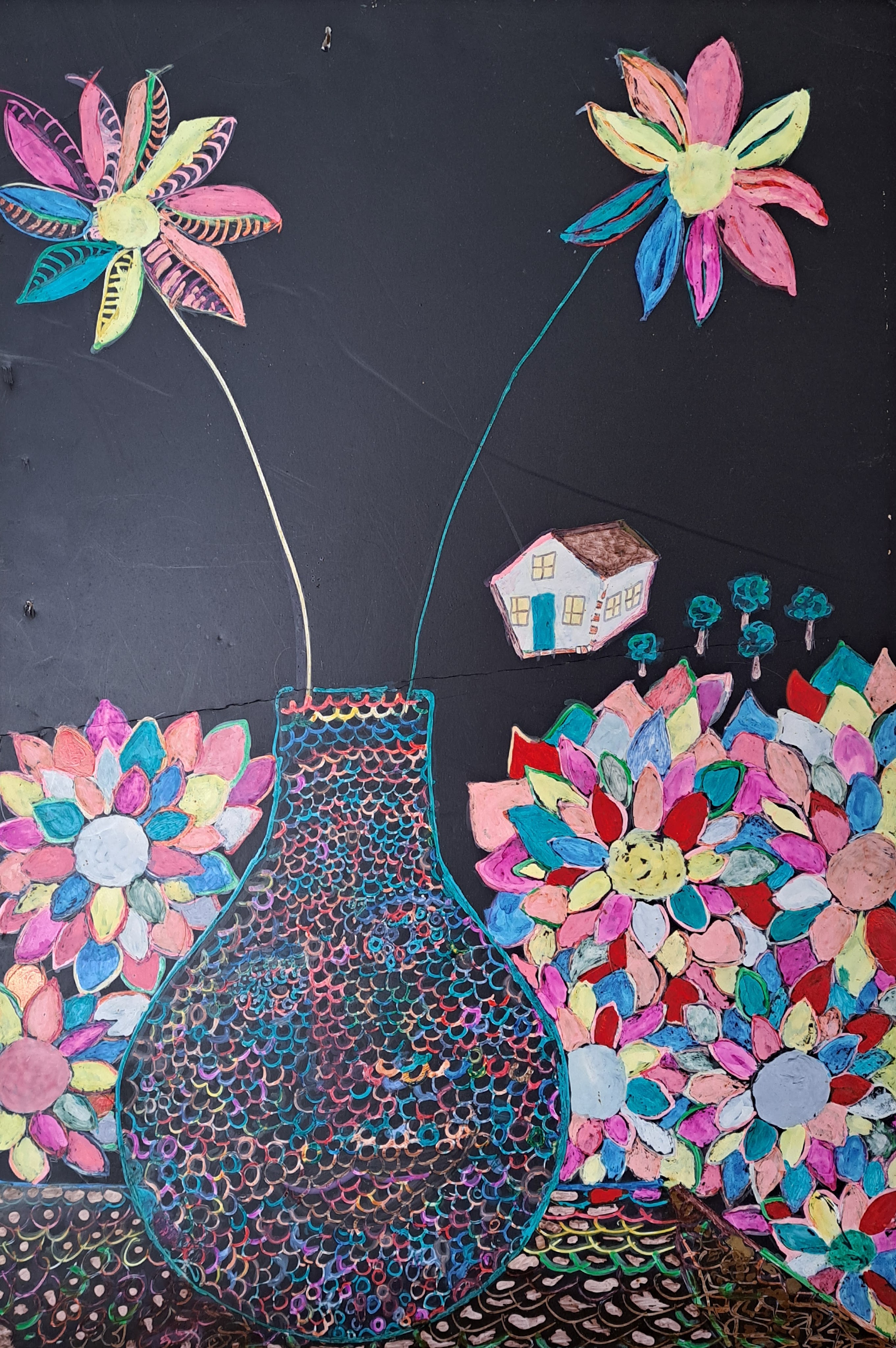
I don’t know much about art or artistic styles but I suppose Earle’s paintings would fall under the umbrella of ‘abstract’. I also don’t know what qualifies as good art or what is considered bad art, so I wouldn’t dare to place any of Earle’s paintings anywhere on that spectrum. I will say that the more I look at many of them, the more I seem to like them.
I’ve been cleaning out Earle’s house over the past couple of months, and have been putting aside most of his paintings. Some were in too bad a condition to keep and had to be tossed. Most of what remain are in some form of disrepair – dirty, dusty, torn, grimy, or worse. They all could use a good, gentle cleaning. They come in all sizes, from a few inches by a few more inches, to a few feet by a few more feet. Some are painted on canvas, some on other types of material, some on cardboard, and some are painted right on the walls of his house.
Other than a couple of guitars, a few odds and ends and personal mementos and possessions, a Bop-It, his paintings are all that really remain of Earle, as far as tangible things go. We all who knew him, of course, will have our memories.
I don’t know what to do with his paintings. But I thought it’d be a good idea to photograph them and post them onto the internet.
Here, then, are the paintings by Earle Bruce MacDonald:
An example of a painting painted right onto a wall.
So Exquisite Harbour

Have you seen this man?
Said the posters
In a pessimistic hue
Been up for weeks on poles
Uh-oh, does not look good for you
Your frightened eyes
Caught by surprise
Marker mustache and blackened eyes
Obscure your grainy face
No sympathy for such an ugly face
You'll find him

In our harbour
Floating in our harbour
Scaring all the fish
When we're savouring the vista
Of our so exquisite harbour

Below the surface
Way down deep
The bluest water's black
The submarine may dive, dive, dive
But Nemo brings it back
And you’re well read
Or so she said
Lying on your futon bed
Longing for her herbal tea
She loves the tea because there's no caffeine
You'll find her

In our harbour
Floating in our harbour
Scaring all the fish
When we're savouring the vista
Of our so exquisite harbour

Our so exquisite harbour
Is the only of its kind
Its utter charm and tranquility
Gives us peace of mind

A drowning mare
Can draw your stare
But less so on TV
And I can't hold my pee
Or hold my pee-pee
When I pee

Two alarm
Tractors and farms
Ran over both my dangling arms
Now my legs are stained with pee
We all get wet
Regardless of the breeze

In our harbour
Floating in our harbour
Scaring all the fish
When we're savouring the vista
Of our so exquisite harbour

In our harbour
Floating in our harbour
Scaring all the fish
When we're savouring the vista
Of our so exquisite harbour




















 The Annekenstein Monster